Indices Trading
Trade the world’s leading stock exchanges with Index CFDs across powerful platforms.
Trade Indices with an award-winning broker
FTSE 100, S&P 500, Nikkei 225, Hang Seng, DAX 40 are some of the most important stock indices in the world. Their performances are always at the forefront of financial news updates. If you would like to trade stock indices without actually investing in one, Contracts for Difference (CFD) on indices may be the solution you are looking for.
VTIFX provides exposure to a wide array of global stock indices through Index CFDs with competitive leverage on world-class trading platforms. We’ve partnered with leading banking and non-banking financial institutions to ensure a deep liquidity pool so that you get the best available market prices and ultra-low latency order execution.
What are the benefits of indices trading?
- Trading Index CFDs allows you to speculate on the direction of the underlying index’s movement, without having physical ownership of any shares.
- Exposure to international stock indices.
- Competitive leverage means you can choose to increase your exposure with only a small investment.
- Trading CFDs on Indices can be cost-efficient as not owning the underlying asset may mean fewer tax liabilities.
- Suitable for hedging strategies or portfolio diversification.
What is the best platform to trade Indices?
MetaTrader 4, MetaTrader 5 and cTrader are the most popular platforms for trading Indices.

Discover the benefits of Index CFD trading using the MetaTrader 4 (MT4), MetaTrader 5 (MT5) and cTrader trading platforms. Available on desktop and mobile, the MT4/MT5 and cTrader platforms can change your trading perspective.
- Customisable interface, including colours of technical indicators
- One-click trading
- MarketWatch
- Live price streaming on Live and Demo accounts
- 128-bit SSL encryption for secure trading
- Expert Advisors (EAs)
- Customisable alerts
- Compatible with iOS, Android and Mac devices
Are there more platform options?
We recommend MT4 and MT5 for Indices but a range of products can also be traded on the cTrader platform.
Why Trade Index CFDs with VTIFX
Accessible & Affordable
Benefit from our low-cost, competitive margins, starting at just 1%.
Convenient Contract Size
With a US$1 per point movement exposure, cash index contracts allow you to tailor your position size.
Zero Commissions
the cost of cash index contracts is built into the bid-offer spread.
Hedge Risk
Diversify your portfolio by trading Index CFDs and hedge your risks.
What is Index trading?
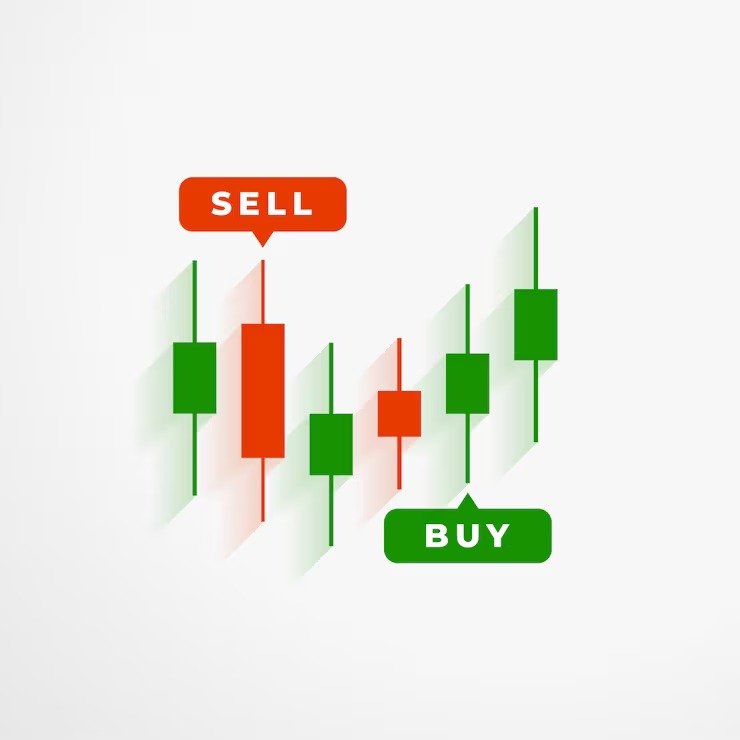
Stock market indices measure a specific stock market. They represent the value of a country’s group of stocks. Investors use the calculated value of a stock index as an indicator of the current value of their component stocks. Every stock exchange has a benchmark stock index, while some have several.
If you do not want to invest in several different shares belonging to a specific stock exchange, trading Index CFDs may be a good option to add to your portfolio. CFDs are financial derivatives that track the price movements of an asset without the trader having to own the asset itself. Trading CFDs on indices enables traders to open large positions with a small initial capital, thanks to leverage and low margin requirements. Traders can go long or short depending on their goals and take advantage of deep liquidity as well as tight spreads which are prime characteristics of major indices.
Index trading example
Suppose you want to trade CFDs, where the underlying asset is the US30, known as ‘Dow Jones Industrial Average Index’.
The US30 is trading at: Bid Price: 42497.00 / Ask Price: 42499.00

Index trading example
You decide to buy five contracts of US30 because you think that the US30’s price will rise in the future. Your margin rate is 0.5%. This means that you need to deposit 0.5% of the total position value into your margin account.
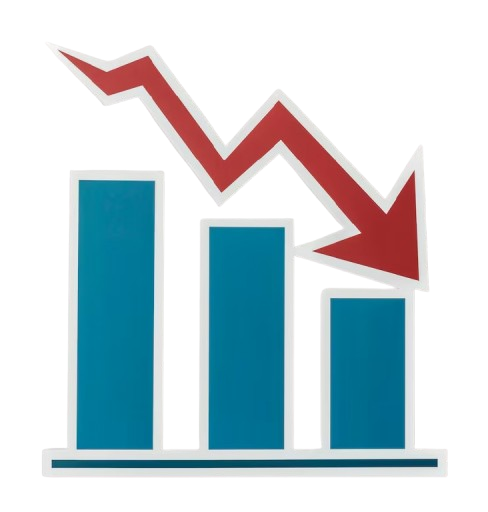
In the next hour, if the price moves to 43500/43502, you have a winning trade. You could close your position by selling at the current (bid) price of US30 which is 43500.

Index trading example
Had the price declined instead, moving against your prediction, you could have made a loss. This continuous evaluation of price movements and resultant profit/loss happens daily. Accordingly, it leads to a net return (positive/negative) on your initial margin.
In the loss scenario where your free equity (account balance + Profit/Loss) falls below the margin requirements, the broker will issue a margin call. If you fail to deposit the money, and the market moves further against you, when your free equity reaches the 50% of your initial margin the contract will be closed at the current market price, known as ‘stop out’.
6 reasons to choose VTIFX
Reliable & regulated
Licensed across multiple jurisdictions, ensuring transparency and security.
Cost-effective Trading
Spreads as low as 0.0 pips, fast execution, and transparency.
Market Expertise
Trade smarter with in-depth, real-time analysis from our Research Team.
Multilingual Support
A dedicated multilingual support team available in your preferred language.
Reliable & Regulated
Licensed across multiple jurisdictions, ensuring transparency & security.
Intuitive Platforms
Trade with confidence on industry-leading platforms available across all devices.
Dividends Adjustments
When holding a Long position on a Cash Index CFD contract that includes dividend-paying stocks, you will be entitled to an amount equal to the amount based on the number of contracts you hold after the close of the business day before the ex-dividend date.
Conversely, if you hold a Short position in a Cash Index CFD which pays a dividend, you will be required to pay an amount based on the number of contracts you hold after the close of the business day before the ex-dividend date. These adjustments may be made either as a cash adjustment into your MetaTrader 4 (MT4) or MetaTrader 5 (MT5) trading account or included in the overnight swap (rollover) rate.
What are the most traded Indices?
Dow Jones
The Dow Jones Industrial Average, often referred to as ‘the Dow’, is a price-weighted index of the 30 largest companies listed in the US. Salesforce, Boeing and Walt Disney are among the companies that make up the index.

S&P 500
The S&P 500 tracks the 500 largest US stocks and is weighted by market capitalisation. Well known companies on the S&P 500 include Amazon, Apple, Microsoft, Alphabet and Tesla.

Copy
The FTSE 100 is made up of the 100 largest stocks by market capitalisation on the London Stock Exchange. It is commonly referred to as the Footsie and includes major financial institutions such as Lloyds and Barclays.

ASX 200
The ASX 200 tracks the performance of the 200 largest publicly listed companies on the Australian Securities Exchange (ASX). Maintained by S&P Dow Jones Indices, it is widely regarded as the primary benchmark for the Australian equity market.

How to identify what moves an Index’s price?
Several factors can influence an index’s price, including:
Movement in its constituents
Significant price movement in stocks included in a particular index could be a reason for a change in the index’s value.
Financial news and data
Financial news updates and reports can affect stock markets and benchmark indices. Inflation metrics, unemployment reports, and monetary policy decisions are some of the sets of data that can influence global markets.
Political news
Elections, political crises, and changes to trade relations are among the political factors that can impact financial markets and key components such as indices.
Changes in composition
The addition or removal of stocks from an index can cause fluctuations in its value.
Why trade Indices?
Trading opportunities
Index CFDs allow traders to speculate on both rising and falling global markets. Traders can take advantage of fluctuating indices by opening long or short positions depending on the market outlook.
Hedging
Indices can be an effective tool for hedging portfolio risk. For example, if your portfolio consists of a specific sector’s shares, you can open a CFD position on a relevant index to balance potential losses from market downturns.
Diversification
Index CFDs allow traders to gain exposure to global markets without having to invest in individual stocks. For instance, Australian traders can access global indices like the DAX 40 or the Hang Seng Index to diversify geographically.
Leverage
One of the prime characteristics of Index CFD trading is leverage; this allows traders to manage larger positions with a smaller initial margin. Risk management is essential when trading with leverage.
How to trade Indices?
One of the ways to trade indices is through Index CFDs on an online trading platform. Index CFDs allow traders to speculate on indices’ price movements without owning the underlying stocks. VTIFX offers Index CFD trading via the MetaTrader 4, MetaTrader 5 and cTrader trading platforms. For more information regarding trading indices and its various aspects, check out How to Trade Indices.
Start trading the global markets with a regulated broker
- 10,000+ financial instruments
- Cutting-edge trading platforms
- Spreads as low as 0.0 pips
- 24/7 multilingual Customer Support
By registering, you agree to VTIFX’ Privacy Policy and consent to receiving marketing materials from VTIFX in the future. You can unsubscribe at any time.